Curious which spring window gives you the iconic pink lanes while avoiding the worst crush of travelers? The Japan Meteorological Corporation issued its second official 2026 forecast on January 8, 2026, and that update changed the planning game for many people.
You should aim to see cherry blossoms in late March and early April. The clearest overall window is March 27 to April 7, 2026, a span that most experts now point to for peak bloom across major city parks.
Book flights and hotels between December 2025 and January 2026 for better choice and rates. Keep in mind the weather can shift bloom dates by 3–5 days each year, so track official updates as spring unfolds.
With a little lead time and flexible plans, you can see cherry blossoms while managing crowds and expectations.
Key Takeaways
- Official 2026 forecast released January 8, 2026; use it when planning.
- March 27–April 7, 2026 is the prime window for peak bloom.
- Book travel between December 2025 and January 2026 for best options.
- Expect 3–5 day shifts due to weather; stay flexible.
- Track the Japan Meteorological Corporation updates during spring.
Understanding the Sakura Phenomenon
Sakura unfolds in distinct stages that shape how locals and visitors plan their outings. Knowing those steps helps you catch the display at the moment that matters.
Kaika and Mankai
Kaika marks the first open flowers — about 5–10% of buds. During this phase you’ll notice the first pale pink hints along the branches.
Mankai is full bloom, when roughly 80% or more of the flowers are open. This is the visual peak that fills parks and riverbanks with petals.
The Cultural Significance of Transience
The cherry blossom season is a short, moving event across the country. People celebrate the bloom, then watch as the petals fall in a quick, beautiful sweep called hanafubuki.
Mono no aware — an empathy toward things — explains why the blossom season has deep meaning. The brief life of each flower reminds you to savor the moment’s beauty.
- The stages — kaika to mankai — guide your viewing choices.
- Falling petals create a memorable flower blizzard you won’t forget.
- Studying the stages helps you appreciate why this season matters in Japan.
The Best Time to Visit Japan for Cherry Blossoms and Fewer Crowds
The sakura wave moves north each spring, so choosing a region matters more than locking on a single date.
Okinawa often blooms as early as January, while Hokkaido waits until late April or early May. In central areas, peak bloom usually lasts 4 to 7 days, depending on weather.
If you want quieter viewing, head north in early April or pick secondary cities off the Tokyo–Kyoto–Osaka circuit. The blossom season travels like a wave from south to north, so planning around that flow improves your chances.
- Late March to early April gives the best chance for central city blooms.
- Shoulder visits often mean fewer crowds and calmer parks.
- Stay flexible—annual weather shifts can move the bloom several days.
| Region | Typical Bloom | Peak Length | Crowd Notes |
|---|---|---|---|
| Okinawa | January | 4–7 days | Low to moderate |
| Central Honshu | Late March–Early April | 4–7 days | High in major cities |
| Hokkaido | Late April–May | 4–7 days | Lower, more dispersed |
see cherry blossoms with a plan that favors regions and shoulders. A smart route and flexible dates help you enjoy the season japan without the worst crowds.
Decoding the Official Forecasts
Forecast updates give you a practical roadmap for landing at peak bloom in the right city. The Japan Meteorological Corporation issued its second official 2026 forecast on January 8, 2026, and that release set clear targets for travel planning.
How to Track Weekly Updates
Start checking official updates in mid-February. The agency posts weekly forecasts through spring, refining dates as temperatures change.
For 2026 the guides point to Tokyo reaching full bloom on March 27, Osaka on March 31, and Kyoto on April 1. Use those dates as anchors, not guarantees.
Sakura season depends on daily weather. A warm spell can move a bloom window forward by several days. Cold snaps can delay it just as fast.
- Watch weekly bulletins to pin down the likely full bloom date for each city.
- Adjust your itinerary if forecasts shift in late March—flexibility wins.
- Rely on the Japan cherry blossom updates for the most accurate, localized guidance.
Essential Planning Strategies for Your Trip
Smart choices on lodging and routing will stretch a few days of bloom into a full experience.
Booking Accommodations Early
Book between December 2025 and January 2026 for the widest hotel selection. Prices during peak season typically run $150–$300 per night, compared with $80–$150 off-season.
Reserve refundable rooms when you can. That protects your budget if the forecast shifts.
Choosing the Right Itinerary
Build a route that covers both late March and early April dates. That gives you a better shot at full bloom without nonstop rushing.
Prioritize stays in cities likely to reach peak first, then add nearby smaller towns as backups.
Flexibility as an Advantage
Weather can change bloom windows by days. Add extra nights and local options so you can pivot easily.
“A small buffer in your plans often turns a missed date into a perfect view.”
| Action | When | Why | Cost note |
|---|---|---|---|
| Book hotels | Dec–Jan | Best selection, refundable options | $150–$300 peak |
| Plan flexible route | Late March–Early April | Chase bloom without stress | Extra nights add $80–$150 |
| Monitor weather | Weekly in March | Adjust transit and stays | Low cost, high benefit |
Having backup plans and checking forecasts will help you enjoy the blossom season with less stress and better photos. With a little flexibility, you’ll catch the moments that matter.
Navigating Tokyo Blossom Hotspots
Tokyo offers a huge range of places to enjoy the cherry blossom season, from riverside walks to manicured gardens. You’ll find lively scenes and calm pockets within the same city.
Meguro River runs about 3.8 kilometers lined with roughly 800 cherry trees. Visit early in the morning to avoid crowds and enjoy the soft light on the petals.
Ueno Park features over 1,000 cherry trees and a festive hanami atmosphere. Street food stalls and lively groups make this an energetic spot if you like food while you walk.
If you prefer quieter viewing, try Shinjuku Gyoen. The small entry fee helps keep crowds down and creates a calmer experience among well-kept cherry trees.
The Imperial Palace moat is another favorite for seeing cherry blossom in full bloom. Nights are magical when the city lights up the flowers—plan an evening stroll if your schedule allows.
- Go on weekdays or at dawn for lighter crowds.
- Mix iconic spots with quieter parks to balance energy and peace.
- Bring small cash for food stalls and enjoy hanami like a local.
| Location | Highlight | Why go |
|---|---|---|
| Meguro River | 3.8 km, ~800 trees | Riverside walk, great photos |
| Ueno Park | 1,000+ trees | Festive hanami, street food |
| Shinjuku Gyoen | Managed entry | Calmer viewing, gardens |
Exploring Kyoto’s Traditional Beauty
In Kyoto the blossom season blends history and nature in ways few cities can match.
Philosopher’s Path runs about 2 km and features roughly 500 cherry trees. Walk between Ginkaku-ji and Nanzen-ji for a calm, picture-ready route.
Maruyama Park turns into a lively hanami hub. The famous weeping cherry tree draws locals who bring simple food and low picnic mats under the branches.
At Kiyomizu-dera the temple lights make the blossoms glow after dusk. The petals drifting onto stone steps create a scene you will remember.
- Go early in the morning to avoid the largest crowds and capture soft light.
- Mix temple visits with a walk through Gion where blossoms frame wooden streets.
- Try traditional snacks while you pause—street food adds local flavor to the experience.
“Petals on Kyoto’s stone paths feel like history falling softly around you.”
Discovering Osaka and Beyond
The city balances modern life with the soft sweep of the cherry blossom season. Osaka Castle Park surrounds the white castle walls with over 4,000 cherry trees. Early morning visits give you the best light and fewer people for photos.
Along the Okawa River, 4 kilometers of trees form a long, shady route. Locals cycle, picnic, and grab street food while they enjoy hanami. The riverside paths make it easy to move and find quieter spots.
The reflection of flowers in the castle moat creates a memorable shot. You will often find Osaka less crowded than Tokyo or Kyoto, so the viewing feel is more relaxed. Wander smaller parks and temple grounds to extend your blossom experience.
- Osaka Castle Park — 4,000+ cherry trees, great for photos.
- Okawa River — 4 km of riverside viewing and hanami culture.
- Visit early for soft light and calmer scenes.
“Osaka shows how city life and petals can sit side by side.”
| Location | Highlight | Why go |
|---|---|---|
| Osaka Castle Park | 4,000+ trees | Iconic views, castle reflections |
| Okawa River | 4 km riverside | Hanami, cycling, food stalls |
| Smaller parks | Quiet spots | Less crowds, calm experience |
The Magic of Mount Yoshino
Walking Mount Yoshino you’ll see layers of bloom sweep the hills at different speeds.
Mount Yoshino hosts about 30,000 cherry trees planted on terraces that climb the slopes. The trees gather in four named areas: Shimo-senbon, Naka-senbon, Kami-senbon, and Oku-senbon.
That layout is the secret. Because the trees sit at different elevations, the blossom lasts longer than in city parks. You can follow the wave of bloom as it moves up the mountain.
Hanami here feels different. Instead of sidewalks and concrete, you picnic beside temples and shrines among wide stands of trees. The petals drifting through forested paths are unforgettable.
- Huge scale: 30,000 trees create a sea of pink.
- Staggered bloom across four areas gives extended viewing.
- Temples and mountain views add historic beauty to the blossoms.
“Many photographers call Mount Yoshino the place to see the sheer scale of the cherry bloom.”
Embracing the Art of Hanami
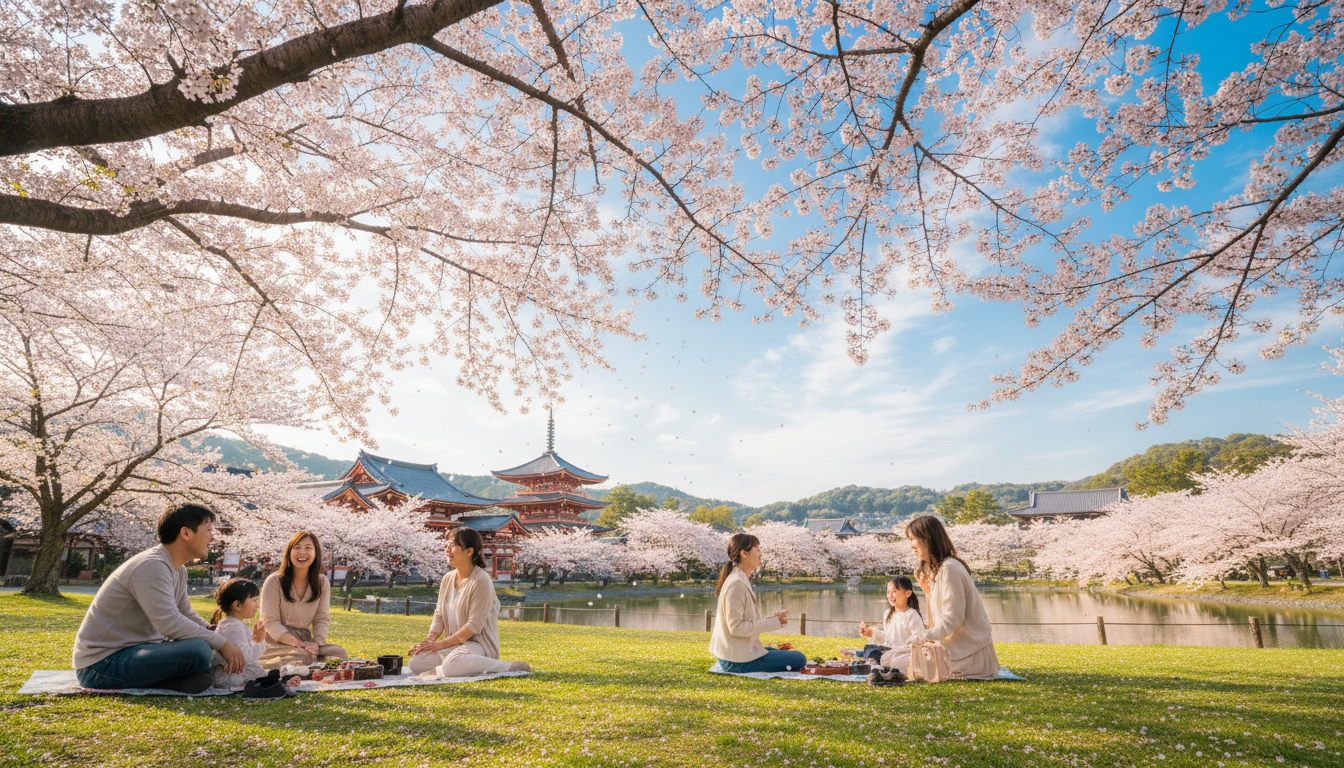
Hanami turns a walk under flowering trees into a shared, joyful ritual. You join locals on a blanket, bring seasonal sweets, and sip fruit wine while the park hums around you.
Hanami is the Japanese art of springtime flower watching. The practice centers on the cherry blossom season and the brief full bloom when flowers and petals fill the air.
Join people in parks for relaxed viewing and picnic-style food. Many groups bring elaborate spreads, but simple snacks work perfectly too. Whether you sit in a quiet garden or a lively city spot, the act of sitting beneath trees connects you to local life.
Respect matters. Clean up after your group, avoid loud disruptions, and leave the grass as you found it. That keeps these spots beautiful for everyone who comes to watch the blossom season unfold.
“Sharing a meal under the trees is one of spring’s simplest, sweetest memories.”
- Participate in hanami to learn why the cherry holds cultural meaning.
- Bring a small blanket, seasonal treats, and a willingness to relax.
- Follow local etiquette so parks stay pleasant for all viewers.
Cultural Etiquette for Visitors
Local etiquette helps you fit into hanami gatherings without causing harm to the trees.
When you join spring viewing, remember parks are shared spaces. Keep your voice low and move slowly so people near you can enjoy the moment.
Never touch or pull on the cherry trees. Branches and buds are fragile. A single pull can damage a limb and shorten next year’s display.
Always take your trash with you. Carry a small bag and pack out wrappers, bottles, and food scraps. Clean parks show respect and help the community maintain these sites.
“Leave the spot as you found it — small actions protect the views everyone came to see.”
- Give people space on blankets and paths.
- Keep noise reasonable during picnics.
- Follow local signs and staff directions during busy weekends.
| Rule | Why it matters | Quick tip |
|---|---|---|
| Don’t touch branches | Protects fragile buds and trees | Admire from a short distance |
| Pack out trash | Keeps parks clean for everyone | Bring a small trash bag |
| Be mindful of space | Respect local hanami culture | Arrive early or move to quieter spots |
Managing Your Travel Budget
A little budget planning goes a long way during peak spring travel.
Expect higher hotel rates during peak season: roughly $150–$300 per night. Off-season prices usually fall to about $80–$150 per night.
Book lodging early and pick refundable options when possible. Staying a bit farther from main cherry trees often saves money and gives you calm nights.
You can cut daily costs on food by grabbing bento boxes from department store food halls instead of dining at pricier restaurants. Use the excellent train network to move between spots—it’s cheaper than taxis and lets you see more.
- Reserve rooms in December–January for the widest choice.
- Set a daily budget for meals and activities to avoid surprises.
- Be flexible with dates and cities to sidestep peak price spikes.
| Item | Peak | Off-season |
|---|---|---|
| Hotel per night | $150–$300 | $80–$150 |
| Daily food | Moderate with bento savings | Lower |
| Transport | Train network – cost effective | Same |
“A clear budget keeps the focus on the view, not the bill.”
Alternative Destinations for Quiet Viewing
If you want a calmer hanami vibe, look beyond the busiest Japanese parks and try nearby countries that offer beautiful spring displays.
Taiwan shows off cherry trees from late January through early April. Yangmingshan National Park is a mountain park where petals fall over hiking trails and hot-spring towns, giving you space and serenity away from crowded city squares.
South Korea stages lively festivals along the Han River. The local version of hanami blends picnics, street food, and riverside walks. You can see cherry blossom-lined promenades and castle grounds with fewer international visitors than major Japanese sites.
Why consider these spots? They offer similar cultural rituals, excellent food, and distinctive views of trees, temples, parks, and historic castles. Visiting them lets you see cherry blossoms while avoiding the peak tourist crush in big cities.
- Yangmingshan — mountain hikes and quieter blooms.
- Han River festivals — riverside picnics and local hanami.
- Smaller parks and castles — calm viewing and rich food scenes.
| Region | Typical Bloom | Why go | Crowd level |
|---|---|---|---|
| Taiwan | Late Jan–Early Apr | Mountain parks, local food | Low–Moderate |
| South Korea | Late Mar–Early Apr | River festivals, castles | Moderate |
| Small cities | Varies | Quiet temples, parks | Low |
Staying Connected and Protected
Staying online makes it easy to pivot when local forecasts nudge the bloom window earlier or later. Buy a Japan eSim or rent a pocket Wi‑Fi so maps, trains, and reservation apps work without hassle.
Protect your health and your plans. Purchase travel medical insurance before you depart. In crowded places you may need quick care, and insurance helps cover unexpected costs.
Keep digital copies of passports, bookings, and policy numbers in a secure app. Also store one paper copy in a separate bag so you have backups if your phone fails.
- Use a mobile app to track viewing spots and live forecasts.
- Charge your phone fully and carry a small power bank for long days out.
- Share your basic itinerary with someone at home for safety.
“By staying connected and protected, you focus on the view—not the surprises.”
With solid connectivity and sensible protection, your travel days under the trees will feel calmer and more fun.
Conclusion
With modest planning and a flexible schedule, you can catch the most meaningful scenes of the cherry blossom season. Plan refundable stays, track forecasts, and build a short buffer in your route so you can pivot when dates shift.
When you chase a japan cherry blossom or a quieter blossom season spot, aim for smaller parks and early mornings. Those choices help you see cherry trees with less rush and better light.
Enjoy the season japan has each year by staying flexible in your travel plans. Take in the simple moments across different places, keep expectations realistic, and savor the view.
FAQ
When is sakura usually at kaika and mankai?
Kaika (when buds open) typically starts in late March in southern Honshu and moves north through April. Mankai (full bloom) often occurs about a week after kaika. Northern areas like Hokkaido hit full bloom in late April to May, while Tokyo and Kyoto usually see peak petals in late March to early April.
How can you track weekly blossom forecasts?
Use Japan Meteorological Corporation and NHK forecasts, and follow cherry blossom tracking sites like Japan-Guide. Local prefecture tourism websites also post weekly updates. Check forecasts a few times during the week before you travel so you can adjust plans quickly.
What planning strategies help avoid large crowds?
Book accommodations well in advance but aim for off-peak neighborhoods. Visit major sites early morning or on weekday afternoons. Add less-known spots like smaller city parks, riverside paths, or regional towns to your itinerary to spread out visitors.
Which Tokyo spots offer great views with relatively fewer people?
Try Kiyosumi Garden, Senzokuike Park, or the Meguro River at the eastern end. Away from Ueno and Shinjuku Gyoen, these areas give beautiful lines of cherry trees with lighter crowds, especially on weekdays.
Where in Kyoto can you enjoy traditional hanami without overwhelming crowds?
Visit the Philosopher’s Path early mornings, and explore smaller temples like Daikaku-ji or Otagi Nenbutsu-ji. Arashiyama sees many visitors, so head there at dawn or pick adjacent neighborhoods to avoid peak tourist traffic.
What makes Mount Yoshino special for blossom viewing?
Mount Yoshino has thousands of cherry trees planted across slopes, creating layered waves of color from village to summit. The site spreads visitors across trails and viewing terraces, giving a more immersive experience than single-park crowds.
How should you practice hanami etiquette?
Bring a small mat but avoid blocking pathways. Clean up trash, follow local rules about alcohol in certain parks, and respect quiet hours near temples. Ask before photographing people closely and leave trees and blossoms undisturbed.
What weather should you expect during blossom season?
Expect cool mornings and milder afternoons in late March and April, with sporadic rain and wind that can shorten bloom periods. Pack a light waterproof jacket and layers so you can enjoy long days outdoors comfortably.
How can flexibility improve your sakura experience?
Keep a movable itinerary and open accommodation options so you can chase peak blooms as forecasts update. Adding buffer days in nearby cities increases your chance of catching full bloom while avoiding the most crowded moments.
Are there quieter alternative destinations to see flowers?
Yes. Consider smaller prefectures like Tottori, Akita, or Shimane, and inland spots such as Takato Castle Park in Nagano. These places often have spectacular trees but fewer international visitors.
What should you budget for during sakura season?
Expect higher accommodation and flight prices during peak weeks. Book early for better rates, use regional trains instead of shinkansen for shorter hops, and balance big-city stays with rural nights to manage costs.
How can you stay connected and protected while traveling?
Rent a pocket Wi‑Fi or buy a local SIM for forecasts and navigation. Carry travel insurance that covers delays and cancellations—bloom timing can shift with weather. Keep digital copies of reservations and emergency contacts.
Which foods and experiences pair well with hanami?
Bring or try seasonal treats like sakura mochi, dango, and bento boxes. Join local hanami picnics, visit tea houses near temple gardens, and sample street foods at nearby markets to round out the floral experience.