What You’ll Need
Gather these before you start. Most of it takes five minutes to pull together — it saves you a dozen back-and-forth texts later.
- A firm headcount. Boats seat 6, 13, or 15 guests, so a rough guess won’t do. Get a final number, and flag any maybes.
- Ages and mobility notes. The boats aren’t ADA certified, but most parties can board with a little help. Tell the crew ahead of time about anyone who needs a hand.
- Bathroom needs. Only one vessel in the fleet has a bathroom onboard. If anyone in your crowd needs one, ask about it before you pick a date.
- A date range with backups. One primary date plus two fallbacks. Departure times shift with the tides, so flexibility matters more than you’d think.
- Access to the online booking calendar. Availability changes by date, and you’ll lock your group’s slot there.
- One point person. Pick the person who collects replies, shares the meeting point, and counts heads on the day. Too many cooks cause late arrivals.
- A short pack list for guests. Jacket, camera, extra snacks and drinks. Bottled water is provided.
- Basic skills: reading a tide-based schedule, and the patience to rework a plan once the departure time is set. No boating experience is needed.
Time required: About 30 to 60 minutes to count, compare dates, and book. Allow a few extra days to collect final replies from your group before you confirm.
Twelve people, one boat, and a glacier that only opens on certain tides. That’s the puzzle behind most Wrangell Tour Groups, and it trips up more organizers than weather ever does.
Here’s the problem. Everyone in your crew has a different flight, a different stamina level, and a different idea of what “early” means. You can’t just pick a morning and hope. The glacier run leaves when the water says it can, and that time shifts daily.
A local captain sees it every week. The planner who texts the group a firm date before checking the tides ends up rewriting the plan twice. The one who counts seats first learns how the route works — locks a single departure? That person gets thanked at the dock.
Getting 6 to 15 guests onto one boat at one time isn’t luck.
It’s a sequence, and the order matters.
Before You Start: What You’ll Get Done and What You Need in Hand
A reunion organizer has eleven relatives, two arrival days, and one glacier trip to book. Half the family wants a morning departure. The tide table says otherwise. That’s the usual mess, and it’s exactly what this section fixes.
Planning Wrangell Tour Groups comes down to one task: get everyone onto a single departure. Glacier timing follows the tides, so the clock isn’t yours to set. You pick from what the water allows.
The end result: one bookable departure time for 6 to 15 guests
By the end, you’ll hold one confirmed time that fits the whole party. Vessel size shapes the numbers. Boats here carry 6, 13, or 15 guests, so a group of 14 needs the 15-seat boat. A group of 16 has to split. Decide that early.
Short on time or want something longer? Look at Wrangell Excursion Tours for multi-day river options run through a partner company.
Materials checklist: headcount, ages, mobility notes, bathroom needs, and a date range with backups
Gather these before you contact anyone:
- Headcount: a firm number, not a guess
- Ages: youngest and oldest guests
- Mobility notes: who needs a steadying hand boarding (the boats aren’t ADA certified, but most needs can be met with help)
- Bathroom needs: only one boat has a bathroom, so flag this up front
- Date range: a main date plus two backups
Backups matter. Tides shift daily. One flexible day often unlocks the best time.
Step 1: Count Your Group and Match It to a Vessel Size
Headcount decides everything else. Before anyone looks at tide tables or departure times, get a firm number. Wrangell tour groups book by boat, not by seat, so a guess of “about ten” can leave a few people stranded on the dock.
Know the three seat counts: 6, 13, or 15 guests
Glacier and river departures run with 6, 13, or 15 guests, depending on the vessel. Here’s how the fleet breaks down:
- 6 guests: Frago, a 26′ jetboat built for shallow river water.
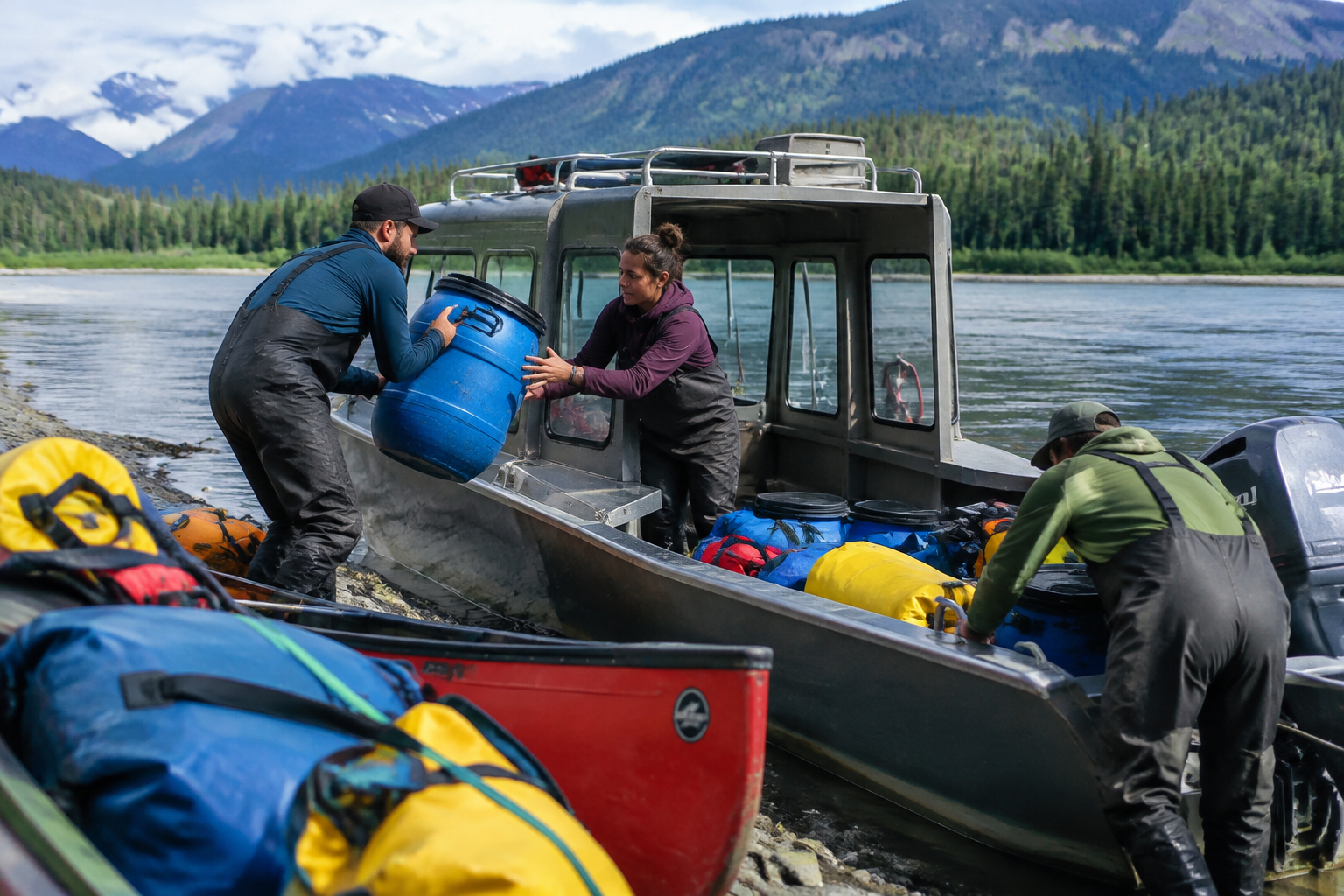
- 13 guests: Stikine Spirit, a nimble 28′ jetboat with a larger back deck.
- 15 guests: Denali, a 28′ jetboat with dual inboard jets.
A party of 14 is the awkward one. It overflows the 13-seat boat, so plan for Denali or split the group. Planners comparing group tours Wrangell should confirm the final count first, since the boat sets the booking.
Got 16 or more? That means two departures, and both need to land on the same tide-friendly window. Ask early. Boats fill fast in summer.
Decide early if anyone needs the one boat with an onboard bathroom
Only Denali has a bathroom. The other boats don’t.
So who in your crew needs one? Young kids, older relatives, anyone with a medical need. If even one person does, request Denali when you reserve, and that choice caps your group at 15. Skip this step and you may find out mid-trip (not ideal on a 3.5-hour run).
Browsing Wrangell Eco Tours is a handy way to compare options once the bathroom question is settled.
Step 2: Learn How Tides Set the Glacier Route and Departure Time
Why does the glacier boat leave at 7:10 one day and 10:40 the next? Tides. For anyone organizing Group Tours in Wrangell, that’s the first thing to grasp, because the departure time is never fixed in advance. It moves daily.
Why the short Dry Strait route only opens on certain tides
Dry Strait is shallow. Boats only get through when the water is high enough — that window comes and goes with the tide. When it’s open, the ride to LeConte Glacier takes about an hour, which leaves roughly two hours among the icebergs and the glacier face. The half-day trip runs 3.5 to 4 hours total.
So what should a planner do? Hold off on locking in a time. Pick your date, then confirm the departure the tide table allows.
What changes on the longer Wrangell Narrows route, including the full-day option with a two-hour town stop
When the tide won’t let a boat through Dry Strait, the crew takes the Wrangell Narrows instead. It’s longer, around one to two hours each way. The full-day option is built for this. It runs about 7 hours and includes a two-hour self-guided stop in Petersburg, before or after the ice, depending on the water.
Group leaders booking Wrangell boat excursions should plan for these points:
- Vessel size: boats seat 6, 13, or 15 guests, so match headcount to the boat.
- Bathrooms: only one boat has one, so ask early if your group needs it.
- Town stop: tell everyone to bring lunch money and to be back on time.
Step 3: Pick Your Date Window, Then Lock One Departure for the Whole Group
Three group sizes cover every glacier boat in the fleet: 6, 13, or 15 guests. That single fact shapes the whole date hunt. Planners who handle Group Travel Wrangell Alaska trips should pick a date window first, then let the tides set the actual departure time.
Choose the half-day or full-day glacier trip based on your group’s stamina
The half-day runs 3.5 to 4 hours. The full-day runs 7 hours and adds a two-hour stop in a neighboring town for lunch and a leg stretch. Mixed-age crowds? Go half-day. Seven hours on a boat wears down kids and grandparents fast.
Only one vessel has a bathroom onboard, the Denali. Ask for it if your Wrangell tour groups include anyone who needs one.
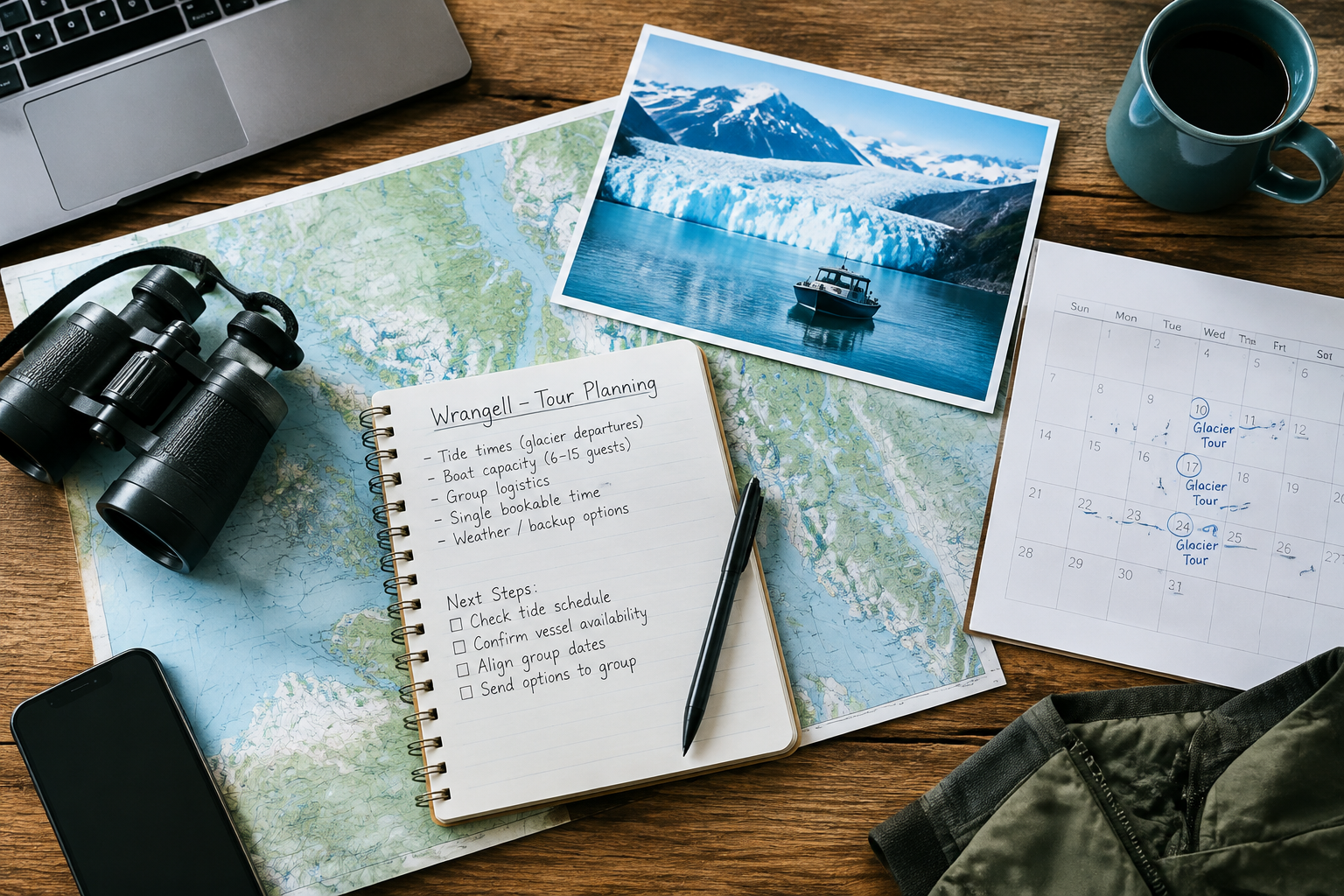
Build a primary date and two backup dates before sending anything to guests
Departure times shift with the daily tide, so don’t promise guests a clock time yet. Instead:
- Pick one primary date and two backup dates.
- Check that all three work for your whole party.
- Confirm availability for your headcount on each date.
- Tell guests the date only. Share the time once it’s locked.
Icepack varies daily, too, so a backup date protects the plan.
Book through the online calendar and confirm the meeting point at the office, with departure from the city dock
Book one departure for the full group through the online calendar. Then confirm the meeting point: guests gather at the office, downtown at the Stikine Inn, and the boat leaves from the city dock. Put both in your group message. Skipping that detail is how a party of 13 ends up split across two spots.
Step 4: Brief Your Group, Fix the Common Mistakes, and Verify the Plan
Sending one long email the night before is a myth that sinks more trips than bad weather does. Guests skim. Brief early, keep it short, and repeat the one detail that matters: the time. Planners using Wrangell Travel Tours as a starting point can match each group’s pace to the right boat.
Pack list to send out: jacket, camera, snacks, drinks
- Jacket: warm and windproof. It’s colder on the water than in town.
- Camera: charged, with a spare battery.
- Snacks: a few extras for the longer ride.
- Drinks: bottled water is provided, but bring more if someone needs it.
Troubleshooting: late arrivals, shifting departure times, icepack surprises, seasick guests, and splitting groups bigger than one boat
- Late arrivals: tell everyone to show up 30 minutes early. Tides don’t wait.
- Shifting times: departures follow the tides, so hold the final time loosely until confirmed.
- Icepack surprises: ice changes daily. Seeing the glacier is expected, never guaranteed.
- Seasick guests: seat them midship, and have them eat lightly and watch the horizon.
- Big crowds: boats carry 6, 13, or 15 guests. A group of 20 means two boats, so pick teams early.
Final check: headcount confirmed, time confirmed, meeting point shared, backup date ready
- Confirm the final headcount with the operator.
- Confirm the departure time the day before.
- Share the meeting point in writing.
- Line up a backup date. Smart Wrangell tour groups always have one.
How-To FAQ
How far ahead should I lock in a glacier departure for a group of 6 to 15?
Book as soon as your date window is firm. Seats per boat are fixed at 6, 13, or 15, so a bigger party has fewer open slots on any given day. Check the online calendar for your primary date and both backups the same day, and book whichever opens first.
Why can’t the company give me the departure time months out?
Departure time follows the day’s tides.
The short route through Dry Strait only opens on certain tides, so the boat leaves when the water allows it. Plan your guests’ arrival around the whole day, not a fixed hour, and share the confirmed time once you have it.
What if my group is bigger than one boat?
Split it across two departures or ask about a larger boat for your date. Here’s what works in practice:
- Keep families and friend clusters together in the same group.
- Pick one meeting point for everyone, whichever boat they ride.
- Name a lead person per boat who has the confirmed time.
Does the glacier trip guarantee we’ll see the ice up close?
No. Icepack changes daily, so seeing the glacier is expected but not guaranteed. Tell your group up front that the crew picks the safest approach — that harbor seals and whales are common sights even when the ice is thick.
What do I do if someone in my group needs a bathroom onboard?
Ask before you book. Only one boat in the fleet, the Denali, has a bathroom, and it seats up to 15. The full-day option includes a two-hour town stop with public bathrooms, which helps groups with younger kids or older guests.
What should I send my group the night before?
Send three things: the confirmed departure time, the meeting point, and the pack list. Guests meet at the office, and the boat leaves from the city dock. Tell them to bring a jacket, a camera, and extra snacks and drinks. Bottled water is provided.
Tides run the schedule. Everything else on a glacier day follows from that. A planner who accepts this early stops chasing a perfect hour and starts building around the one the water allows.
Wrangell Tour Groups work best when the basics are settled before a single invitation goes out: a firm headcount that fits a 6, 13 or 15-guest vessel, a decision on whether anyone needs the boat with the onboard bathroom, and a primary date backed by two spares. Those three choices remove most of the trouble that sinks a group outing. The half-day trip suits mixed stamina. The full-day option, with its two-hour stop in town, suits a group that wants a slower pace.
Icepack will vary, departure times will shift, and a seasick guest or a late arrival is always possible. A leader with a clear plan absorbs all of that without losing the group.
Next step: gather the headcount, ages and mobility notes today, then check the online booking calendar for your date window and reserve one departure for everyone. Share the meeting point at the office and the city dock departure with the whole party the same day.