Key Takeaways
- Book the Anan Creek bear observatory tour for close, guide-managed viewing on a boardwalk platform — kids age 5 and up get roughly three hours near feeding bears without the crowds you’d find at bigger wildlife-viewing sites.
- Pack for cold, wet rides no matter which tours in Wrangell you choose — a warm layer and rain jacket matter more than camera gear on the hour-long boat trip to the platform.
- Check trail rules before you go: no food is allowed near the observatory, and guides carry bear spray and rifles, so kids need to understand they must stay quiet and follow directions fast.
- Pick a stable catamaran wildlife trip over the bear tour if your group has toddlers or grandparents with limited mobility — seals, sea lions, and whales still deliver a big payoff with an onboard bathroom and warm cabin.
- Confirm your meeting point is near the dock and build your schedule around cruise all-aboard times, since glacier and river routes often shift with the tides.
- Ask about bathroom access ahead of time — not every boat has one, and that detail matters more than people expect once kids are three hours into a cold morning on the water.
A brown bear standing thirty feet from your eight-year-old sounds like a nightmare — until you understand how a managed observatory actually works. Most tours in Wrangell involving bears aren’t chaotic wildlife gambles. They’re built around fixed platforms, trained guides, and rules that have kept families safe for decades.
Here’s what most people miss: the danger isn’t the bear. It’s poor planning, wrong timing, or a guide who doesn’t know how to read the animal’s behavior. Wrangell solves that problem differently than the bigger ports do. There’s no stadium-seating tour bus, no thirty-minute photo stop shared with four hundred strangers off a mega-ship. It’s smaller groups, tighter trails, and a platform designed specifically so kids and grandparents can watch salmon-fattened bears feed without ever being in the animal’s path.
That matters if you’re traveling with a nervous kid, a grandparent with bad knees, or a spouse who read one too many bear-attack headlines before the trip. Realistically, the right operator changes everything — the boat ride, the walking distance, the food rules, even how loud your family’s allowed to be near the water.
So what does a real family day near bears actually look like? Not a Hollywood chase scene. More like a quiet three hours on a wooden platform, watching a 400-pound animal ignore you completely because it’s got better things to do — like catching salmon.
Why Wrangell Is a Different Kind of Alaska Stop for Families
Picture a family stepping off a ship, kids already restless, and within ten minutes they’re loading onto a covered boat instead of standing in a ticket line behind three hundred strangers. That’s the daily reality here — no big terminal, no shuttle buses, just a short walk from the dock to the water. The Tours in Wrangell built around bear viewing exist because the town’s small scale makes calm, controlled wildlife encounters possible in the first place.
Small-Town Dock Access Versus Big-City Excursion Crowds
Compare this to a bigger port town, where dozens of buses queue for a single overlook. Here, groups are small — often under a dozen people per boat — and check-in happens face to face, not through a loudspeaker. Kids get real attention from a captain who knows the tides, not a script.
What “Safe and Calm” Actually Means Around Wild Bears
Safe doesn’t mean sanitized. It means trained guides carrying bear spray, a fixed viewing platform, and strict no-food rules that keep bears feeding on fish, not curiosity. Calm means slow boat approaches, quiet voices, and clear instructions kids can actually follow.
Anan Creek: A Family-Ready Bear Observatory Built for Close, Controlled Viewing
Bears don’t care about your schedule — that’s the first thing to accept before booking. Anan Creek works for families because it’s a managed, purpose-built setting, not a random gamble in the brush. Among the Wrangell Alaska Tours on offer, this is the one built specifically for close bear viewing without the guesswork.
The Boat Ride and Short Walk to the Platform
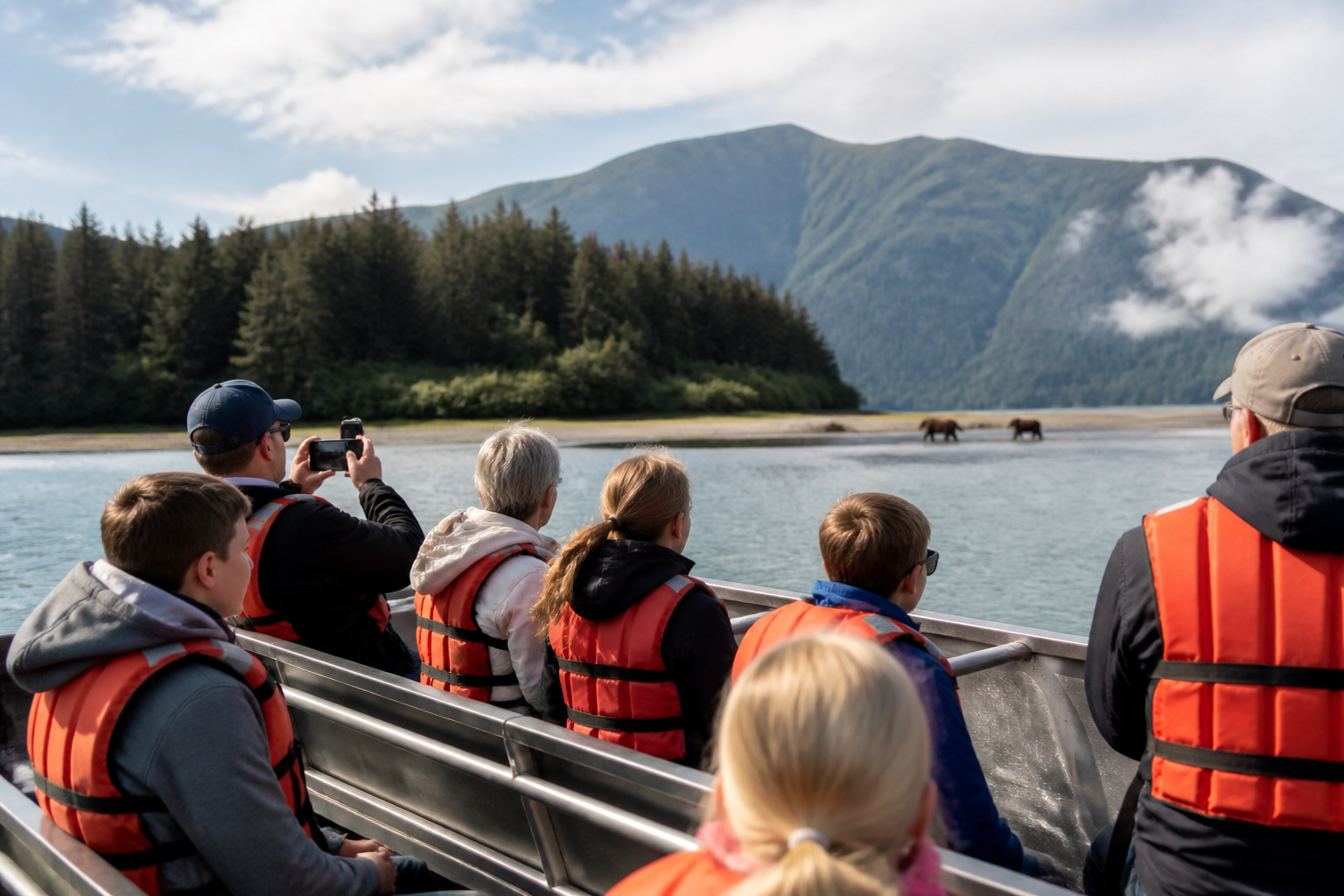
The ride out runs about an hour each way, covered and heated, so kids stay warm. From the dock, it’s a short staircase and roughly a half-mile walk on compacted gravel and wood bridges — similar to a paved sidewalk, honestly. Once there, guests get around three hours watching brown and black bears work the salmon run.
Guide Protocols That Keep Kids Calm Near Brown and Black Bears
Guides carry bear spray and rifles, and following their direction isn’t optional. No food is allowed on the trail or at the platform, period. That structure is exactly what keeps kids calm — clear rules, trained guides, zero improvisation.
Age Recommendations and Why Infants Aren’t a Good Fit
Age 5 is the practical floor. Infant sounds and smells can trigger unpredictable bear behavior, so babies and toddlers just aren’t a good match here.
What a Typical Half-Day With Kids Near Bears Looks Like
What does a morning like this actually feel like when you’ve got a seven-year-old in tow? It starts calm, gets loud with excitement, and ends with everyone talking over each other about the bear they saw. Among the guided Wrangell Tours families ask about most, this one runs on a predictable rhythm — boat ride, short walk, platform time — and that predictability matters when you’re managing kids.
Morning Departure and What to Pack for Cold, Wet Weather
Layers first. Rain jacket second. The boat cabin is covered and heated — the platform sits in the open, and Southeast Alaska weather doesn’t care about your itinerary. Pack rubber boots or sturdy sneakers, gloves for smaller hands, and snacks to eat before boarding (no food’s allowed once you’re near the bears).
Three Hours on the Platform: Managing Kid Attention Spans
Three hours sounds long for a kid. In practice, it moves fast — bears show up, disappear, come back closer. Bring binoculars, let them whisper-narrate what they see, and don’t force stillness the whole time. Quiet curiosity works better than rigid rules here.
Wildlife Tours for Families Who Aren’t Ready for Bear Country Yet
Here’s a number that surprises most parents: roughly 90% of families booking Wrangell glacier tours and ocean wildlife trips have at least one kid under 10 aboard. That tells you something — you don’t need a bear encounter to get a real Alaska payoff. Not every family wants to hand a 6-year-old bear spray protocols on day one.
Whales, Seals, and Sea Lions From a Stable Catamaran
The Ocean Wildlife Tour runs on a 38-foot catamaran, and that hull design matters more than most folks realize. It cuts the rocking that turns young stomachs upside down. Expect humpback whales, harbor seals, sea lions, and sea otters — the captain picks the route each morning based on recent sightings, not guesswork.
Onboard Comforts That Matter With Young Kids
A bathroom onboard. Snacks. Coffee for the adults. Multiple viewing decks so nobody’s stuck pressed against a rail. Three and a half hours is long enough for a real payoff, short enough that a restless kid doesn’t wreck the trip.
Glacier Sightseeing as a Gentler Add-On for Multi-Generation Groups
Most folks assume glacier viewing means grinding uphill for hours before you get a payoff. That’s not how it works out here. A half-day run out to the ice puts grandparents and toddlers on the same bench seat, watching bergs drift by without anyone breaking a sweat. It’s one of the easiest Wrangell Alaska Guided Tours to slot in when your group has mixed stamina and mixed patience.
Iceberg Viewing Without the Long Hike or Trail Rules
No trail limits here. No staircases, no gravel paths, no headcount restrictions on who can stand where. Guests stay seated or move around the deck freely, snapping photos of blue ice chunks the size of delivery trucks. For families who did the math on a toddler’s walking limit and came up short, this is the fix — no walk required at all.
Tide-Based Timing and Why Schedules Shift
Here’s the honest part: departure times move with the water, not the clock. Dry Strait only opens to boat traffic on certain tide stages, so captains build the day around that window. Don’t lock in dinner reservations too tight — the glacier run might leave earlier or later than you’d guess.
Choosing Between Ocean Tours and River Tours With Kids Along
Picture a family standing on the dock, trying to decide between a bigger boat headed out to open water or a smaller jetboat pushing up a shallow river. That’s the actual choice most parents face when booking Tours around Wrangell. Ocean routes bring longer rides and more open swell — great for spotting seals and whales, but tougher on kids prone to motion sickness. River routes stay calmer, closer to shore, and feel more like a scenic float than a sea voyage.
Jetboat Rides on the Stikine River for Curious Younger Travelers
The Frago jetboat draws a shallow draft, so it can tuck into channels ocean boats can’t touch. Kids get close looks at eagles, waterfowl, and the delta’s wildflowers without the rocking that comes from open-water chop. It’s a calmer, more forgiving ride for younger passengers still building sea legs.
Bathroom Access and Comfort Differences Between Vessels
Here’s the practical detail parents often miss: not every boat has a bathroom onboard. The Island Cat does. Smaller jetboats sometimes don’t, though USFS outhouses cover some river stops — worth asking about before booking with young kids.
Safety Rules Every Parent Should Know Before Booking a Bear Tour
Bears don’t care about your vacation schedule. That’s the blunt truth every parent needs to hear before stepping onto a floating dock near a salmon stream. Guides on well-run Wrangell Day Tours set firm rules for a reason — a calm, predictable group is a safe group. Kids get a quick briefing before the walk even starts: stay together, keep your voice down, and listen the first time a guide gives an instruction. No exceptions, no negotiating.
Food Restrictions on the Trail and Why They’re Non-Negotiable
No food or scented gum, candy, or snacks on the trail. None. A dropped granola bar isn’t cute — it’s a lesson that teaches a bear that people equal food, and that lesson gets other visitors hurt later. Eat before you board, eat after you’re back on the water, and pack everything else away tight.
How Guides Handle Sudden Bear Encounters
Guides carry bear spray and, on some routes, rifles, but the real tool is experience reading bear behavior before it becomes a problem. When a bear steps onto the path, the group stops, bunches up, and the guide talks the animal past — quietly, firmly, no sudden moves. In practice, most encounters end with nothing more than a great photo and a story kids will repeat for years.
Getting to Wrangell and Timing Tours Around Cruise Schedules
How much daylight does your ship actually give you? Most calls run 5 to 8 hours, and that’s tight when bears are involved — you don’t want to be rushing a walk near wildlife. The office sits close enough to the dock that families can walk over, check in, and be on the water in minutes, no shuttle bus needed.
Meeting Points Near the Dock for Cruise Ship Families
Look for the flags by the Stikine Inn — that’s the meeting point, roughly 300 feet from where the ship ties up. Crews know the ship’s schedule ahead of time and plan the bear observatory trip so kids and grandparents get back with margin to spare, not a sprint up the gangway.
Building a Tight Port Day Around One Bucket-List Excursion
Pick one big experience and build the day around it. Skip the scattered errands. Booking one of the Wrangell guided tours gives families a calm, structured plan instead of a rushed patchwork of stops squeezed into a short port day.
Matching the Right Wrangell Tour to Your Family’s Comfort Level
Here’s a number that surprises most parents: roughly half of the calls we get about bear viewing come from families who assume every boat ride out there is rough and cold. It’s not. A Wrangell day boat tour on a covered, heated vessel changes the whole equation — kids stay warm, grandparents stay dry, and nobody’s white-knuckling the rail. Among the tours in Wrangell worth booking, the ocean wildlife route tends to fit mixed-stamina groups best because it’s shorter and the boat has multiple decks for spreading out.
Mobility Considerations for Grandparents or Younger Kids
Not every deck is flat, and not every trail is a sidewalk. Bear-viewing sites require roughly a half-mile walk on gravel and wood bridges — manageable for most, tough for anyone with real mobility limits. Ask ahead. Guides can adjust pacing, but they can’t skip the walk entirely.
Weather Contingency Planning Before You Book
Southeast Alaska weather flips fast. Build a buffer day if possible, pack layers regardless of season, and confirm the operator’s cancellation threshold before locking in dates. Extreme weather is the only real dealbreaker.
Planning Your Wrangell Trip: Practical Tips for Families With Kids
Most people assume the best bear viewing means the roughest boat ride. Not true. A well-run bear observatory trip is calmer than a lot of harbor cruises — the water route is short, the boat is covered and heated, and the whole day is built around a controlled, guided walk rather than open-ocean bouncing.
What to Wear and Bring on Any Bear or Wildlife Tour
Layers matter more than any single jacket. Pack:
- A waterproof outer shell and warm mid-layer
- Closed-toe shoes with grip for gravel paths
- A camera with a strap (hands stay free near wildlife)
- Snacks and drinks for before or after — food isn’t allowed near the bears
Kids under 5 aren’t recommended for the bear-viewing trail; younger children can be unpredictable near unpredictable animals, and guides need everyone calm and quiet.
Booking Windows and Group Size Considerations
Bear season runs a tight window, so families should book ahead rather than waiting until they’re in town. Groups stay small on purpose — trail limits cap how many people move together at once. That’s a feature, not a limitation. Fewer bodies means less noise, calmer bears, and a better view for every kid on the dock.
Frequently Asked Questions
What is the best excursion to take in Wrangell, Alaska?
Depends what you’re after. If bears are the goal, the Anan wildlife observatory trip is tough to beat — nowhere else around gets you that close to feeding brown and black bears in a managed setting. If you want ice and calving, the LeConte trip wins. Honestly, most guests who ask this end up wishing they’d booked both.
What are some good shore excursions in Wrangell, Alaska?
For cruise passengers with a tight window, the ocean wildlife tour is the safest bet — 3.5 hours, close to the dock, and built around ship schedules. The half-day glacier run also fits most port days. Anything river-based takes a bit more planning since it runs June through August only.
What are some of the best things to do in Wrangell, Alaska?
Wildlife viewing on the water, a trip up the Stikine River to Shakes Glacier — bear watching at Anan top the list. There’s also plenty to see just wandering the harbor and channel views, but the boat trips are where the real Southeast Alaska show happens. Weather and tides shape the day more than any brochure will tell you.
Is Wrangell, Alaska worth visiting?
Yes — and it’s quieter than a lot of the bigger port towns, which cuts both ways. You won’t find rows of gift shops, but you will find bears, glaciers, and whales without fighting a crowd for a rail spot on the boat. For travelers who want the wild version of Alaska rather than the packaged one, it delivers.
How much time do I need for a good tour experience in Wrangell?
A half day covers the ocean wildlife tour or the shorter glacier run — both last around 3.5 to 4 hours. Anan needs 5 to 6 hours because of the boat ride plus time at the observatory. If you’ve got a full day, pairing the glacier trip with a stop in a nearby town rounds things out nicely.
Do I need to book in advance during cruise season?
Yes, and don’t wait. Group sizes are capped — the Island Cat catamaran seats up to 21, the smaller jetboats far fewer — and cruise-day slots fill fast. Same goes for Anan, since only 12 people are allowed on the trail at once.
Will weather or tides cancel my tour?
Tides shift departure times and routing more than they cancel anything outright — LeConte access through Dry Strait, for instance, only works on certain tides. Actual cancellations happen only in genuinely rough weather, and guides make every effort to reach guests ahead of time if plans change.
Are these tours suitable for kids or older travelers?
Mostly yes, with a few caveats.
The boats aren’t ADA certified, though the Island Cat’s wider doorways and landing-craft bow help guests with minor mobility issues. Anan involves a short walk on gravel and boardwalk, so infants and toddlers aren’t recommended — bear behavior near small kids can be unpredictable.
What should I pack for a Wrangell boat tour?
A warm jacket, a camera, and layers — Southeast Alaska weather turns on a dime. Snacks and water are usually provided, but bring extras if you’re picky. And skip the sandals; deck footing gets wet.
Bears don’t care about your itinerary, the tide doesn’t care about your nap schedule, and that’s exactly why picking the right operator matters more than picking the right day. Families who’ve done this before know the platform at Anan works because the guides run it the same way every time — calm, controlled, no exceptions on food or noise. Kids who aren’t quite ready for that much wild can still get their fix from a stable deck, watching a whale surface twenty feet off the bow with coffee in hand. And for the crew traveling with grandparents or toddlers, the ocean options and shorter glacier runs give everyone a real Alaska moment without pushing anyone past their limit.
Good Tours in Wrangell aren’t built around one-size-fits-all schedules. They’re built around matching the trip to who’s actually sitting in the boat. So figure out your group’s tolerance for cold, walking, and waiting — then book the tour that fits, not the one that just sounds impressive. Reach out directly, ask about the day’s conditions, and lock in a departure time that still gets everyone back to the dock with room to spare.