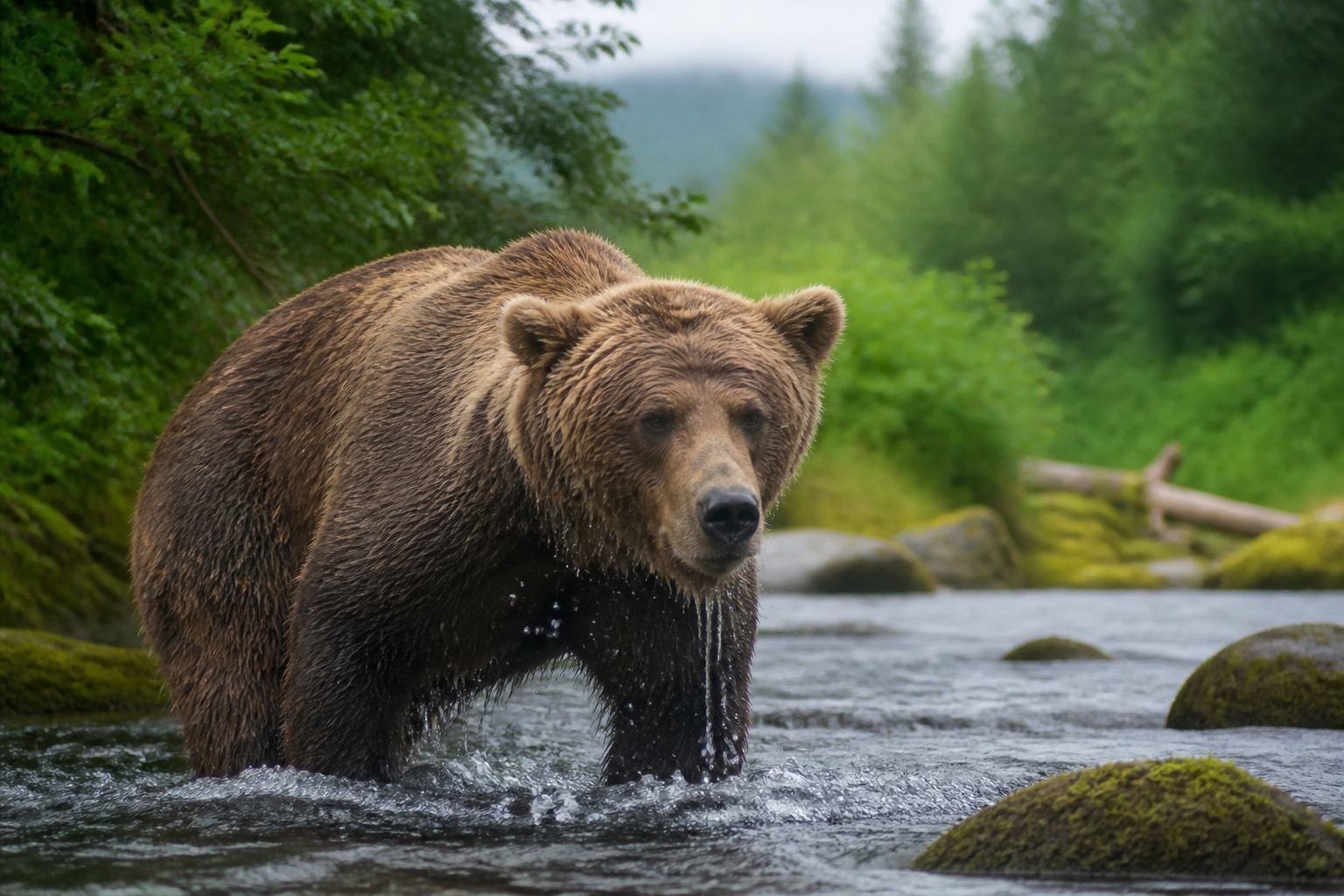
Pink salmon don’t run in April. That single fact settles most of the debate before it even starts. Anan bear tours booked in July and August put you creek-side during the exact weeks when fish stack up thick enough to pull black bears and brown bears into the same shallow water, sometimes thirty feet from the observatory deck.
Guides who’ve spent years reading this creek — not just any creek, this one — will tell you the calendar matters more than almost anything else you can control. Show up in June, and you’re gambling on early fish. Wait until September, and you’re watching the run thin out fast. The window that actually delivers is narrow, and it lands squarely in mid-summer.
For cruise passengers with a single port day and one shot at seeing bears in the wild, that timing isn’t a minor detail. It’s the whole trip.
The Salmon Run Is the Whole Argument — And It Only Peaks in Summer
Picture a July afternoon at the creek: the water’s practically boiling with fish, and a dozen bears are working the banks at once. That’s not a lucky day. That’s a normal Tuesday during peak run. Show up in June or September instead, and you might watch one bear pick through a half-empty stream. The fish make the show, plain and simple — and Anan bear tours only run when the run does.
Why Pink and Chum Salmon Timing Drives Everything at the Observatory
Pink and chum salmon push into the creek in dense waves starting mid-July, and the numbers hold strong through August. Bears know this better than any calendar app. Both brown and black bears show up in numbers because the fish are stacked shoulder to shoulder in the shallows, making them easy targets. Fewer fish means bears spread out, wander off, or show up less often — which is exactly why other bear excursions Alaska operators outside this window can’t promise the same density.
What Guides at Anan Creek Watch For Before Calling It Prime Time
Guides don’t guess. They watch fish counts, water clarity, and how many bears fed the day before. Three factors matter most:
- Fish density in the lower creek pools
- Bear activity logged from the observatory deck the prior 24 hours
- Water levels, since low flow concentrates fish and bears together
When those line up, guides call it prime time. In July and August, that call comes often.
More Bears, Closer Range: The Numbers Behind July-August Anan Bear Viewing
Late July and August is when the pink salmon run peaks at Anan Creek, and that’s the whole reason the timing matters. More fish in the water means more bears pulled out of the timber and onto the banks where guests can actually see them. Guides who run bear tours Alaska visitors book for this exact window aren’t guessing — they’re working off decades of watching the same creek fill up the same way every summer.
Brown Bears vs. Black Bears — Why Anan Sees Both When Fish Are Thick
Anan is one of the few spots in the Tongass where brown and black bears fish the same creek without constant conflict. Once salmon numbers get high enough, there’s simply enough food that both species tolerate each other at a distance. In a slow salmon year, black bears often get pushed out entirely. During the July-August peak, it’s common to watch both on the same afternoon — a rare pairing you won’t get at a lot of other Alaska observatories.
How the Anan Bear Observatory Live Cam Confirms What Guides Already Know
The Forest Service’s seasonal camera backs up what local operators have said for years: bear activity climbs sharply once the run thickens. Guides booking Anan Bear Observatory tours from Wrangell watch that same feed daily to time departures around the best fishing windows, not just the calendar.
Why Wrangell Access Beats a Ketchikan or Neets Bay Detour for Bear Tours
Ever wonder why so many trip planners still add an extra boat leg or floatplane hop before they even reach a bear observatory? It’s a mistake. Wrangell sits close enough to Anan Creek that the boat ride itself becomes part of the wildlife show — eagles overhead, seals on the rocks, and no wasted hours getting there. Anan bear viewing works best when the whole trip stays on one boat, run by folks who know these waters, and that’s exactly what you get here: Anan bear viewing.
Anan Bear Observatory Tours From Wrangell vs. Anan Bear Observatory Tours From Ketchikan
A trip built around Anan bear observatory tours from Wrangell simply cuts the travel fat. Anan bear observatory tours from ketchikan often mean longer transit and more moving pieces before boots hit the trail. Fewer connections mean more time actually watching bears feed — which is the whole point of the day.
Traitors Cove Bear Viewing and Other Alternatives — Why They Fall Short by Comparison
Traitor’s Cove bear viewing and the Neets Bay Bear Observatory both draw crowds, but neither matches Anan’s salmon-run density in July and August. A proper Anan bear tour (Anan Creek Bear Observatory) puts guests on a managed platform with trained guides — not a crowded dock hoping for a glimpse.
The Counterargument: “Shoulder Season Means Fewer Crowds” — And Why That Trade Isn’t Worth It
Here’s a number that surprises most people: Anan Creek sees roughly 60,000 pink salmon run through its waters at peak, and that peak lands squarely in July and August — not in June, not in September. Fewer crowds in the shoulder months sound appealing until you realize why those months are quieter. There aren’t as many fish, so there aren’t as many bears standing around the falls waiting to eat.
What You Actually Give Up Booking Outside July and August
Book outside the salmon run and you’re gambling on a mostly empty creek. Guides running Alaska bear tours will tell you plainly: bear activity tracks fish, period. No fish, no feeding frenzy, no photo-worthy moments at the observatory deck.
Consider what’s actually at stake:
- Bear density — July/August brings both black bears and brown bears converging on the same stretch of river.
- Predictable behavior — fish-focused bears are calmer and easier for guides to manage safely.
- Photo conditions — more animals means more chances at a clean shot.
Quieter trails aren’t worth an empty creek. If you’re weighing options, research on the best places for half-day bear viewing in Alaska consistently points back to peak salmon timing — not off-season quiet.
Booking Your July or August Anan Bear Tour Out of Wrangell
Most folks assume any summer week works fine for bear viewing. That’s not true, and it costs people a real payoff every season. Salmon timing drives everything at Anan — no fish, no bears crowding the creek, no matter how good the weather looks. Booking early in July or holding out through late August puts you in the window when pink salmon stack up thick and both black bears and the occasional brown bear show up to work the water.
What a Guided Trip to the Observatory Actually Looks Like on the Water and the Trail
The trip starts with roughly an hour on a covered, heated boat out of Wrangell — no rough open-water slog, just a steady run through calm channels. From the dock, it’s a short set of stairs then about half a mile on packed gravel and wood bridges, easy walking for most guests. Guides carry bear spray and rifles, and they mean it when they say follow instructions. This isn’t a zoo enclosure. It’s bear tours in Alaska done the way it should be — wild animals, managed access, real distance protocols.
Why Waiting Until Next Season Costs You the Best Window You’ll Get
Push your trip to September, and the salmon run thins fast. Push it earlier than July, and the creek’s still quiet. Anyone researching Alaska bear viewing options should book these six weeks now — spots fill, and the fish don’t wait around for anyone’s schedule.
Here’s the honest math on Anan bear tours: fish drive bears, bears drive the whole experience, and that equation only balances in July and August. Skip those weeks and a guest is betting on scattered sightings instead of a creek stacked with salmon and bears working the banks in plain view. Fewer crowds in the off months sound appealing until the deck sits empty because the bears never showed. Access matters too — a direct run out of Wrangell puts guests on the water and at the observatory faster than the longer detours some other departure points require, which means more time watching and less time in transit.
None of this works by accident. It works because guides read the run, watch the creek, and time the trip to the weeks when brown and black bears are both actively fishing. That’s not luck. That’s a short, predictable window worth planning around.
Cruise ship schedules only allow so many July and August dates before they’re gone. Book the Anan trip now, lock in a summer date, and let a Wrangell crew handle the rest.