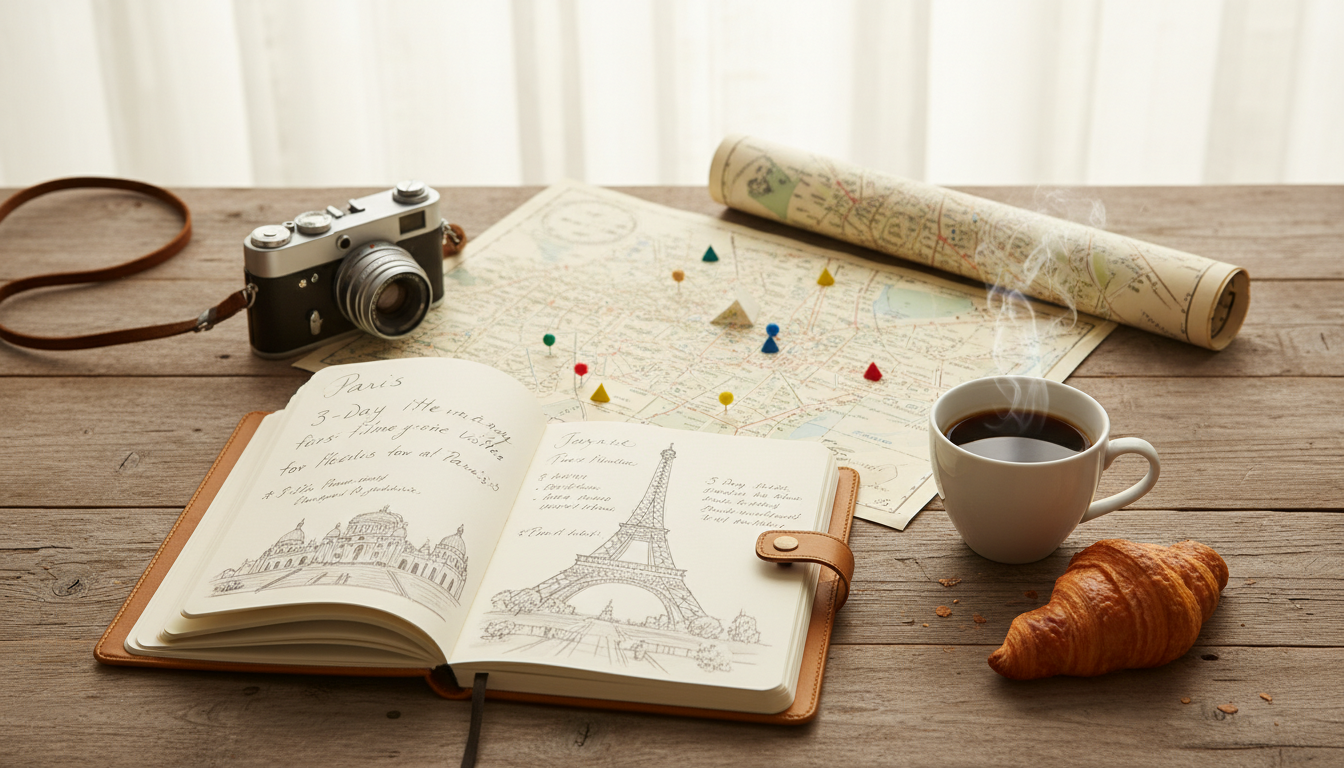
Ready to see if you can pack the best of this city into a short visit and still feel like you’ve truly experienced it?
You can move from a sunrise stroll by the river to an evening with sweeping tower views without wasting hours in lines. This guide makes the plan simple and practical, so your mornings are for museums and afternoons are for walks through lively streets.
The Notre Dame stands as a crown jewel on the Île de la Cité, and the Eiffel Tower rises as an essential landmark you will want to see at dusk. The Louvre opened as a public museum in 1793 and offers endless masterpieces, while the Arc Triomphe crowns the grand avenues you’ll explore.
Follow straightforward tips on tickets, hotel choices, and the best cafes so you spend less time guessing and more time soaking up views, art, and food. This compact plan will help you feel at home in the city, even with limited hours.
Key Takeaways
- Book tickets in advance to avoid long lines and save hours.
- Start mornings at top museums, then explore streets and cafés in the afternoon.
- Catch sunset views of the Eiffel Tower from selected spots across the city.
- Include both iconic landmarks and a few quiet neighborhoods for balance.
- Choose a centrally located hotel to maximize walkable access to major sights.
Getting Started with Your Paris Adventure
Kick off your trip by organizing your time around neighborhoods, not attractions. Treat each morning like a small tasting menu: choose one area, sample its highlights, then move on when you feel satisfied.
Remember that Baron Haussmann reshaped the city under Napoleon III in 1860. His boulevards make walking efficient and safe, and they help you move between quarters quickly.
Plan smart: map your top picks and cluster them by neighborhood. This saves energy and stops you from hopping across far-flung sites. Use public transit when distances grow or when you want more time soaking in cafés and streets.
| Focus | Why it helps | Quick tip |
|---|---|---|
| Neighborhood clusters | Cut travel time and see more | Pick 2–3 spots per area |
| Pacing | Prevents burnout | Mix museums with walks |
| Purpose | Tailors your route | Decide if you want history or nightlife |
Essential Tips for First Time Visitors
Before you set out, a few smart steps will keep your trip smooth and fun.
Booking in Advance
Reserve hotels and major sights early. Popular museums and restaurants sell out fast, so lock in times and tickets before you travel.
Plan around midday closures: many shops and smaller spots shut for a long lunch break, so check opening hours before you go.
Practicing Basic French
Learn a few phrases. A simple “bonjour” and “merci” makes interactions friendlier and often faster.
Make a short list of must-see places and rank them. That keeps your paris itinerary focused and helps you use limited days well.
- Book key attractions and your hotel early to avoid disappointment.
- Check schedules and plan around lunch closures.
- Use polite French greetings to improve local interactions.
- Create a prioritized list so your time highlights the things that matter most.
Understanding the Arrondissement System
Knowing how the arrondissements wrap around the center saves you travel time and stress.
The city is divided into 20 districts called arrondissements, arranged in a clockwise spiral from the center. Baron Haussmann created this plan in 1860 under Napoleon III to make urban planning easier and more efficient.
You don’t need to memorize each district. Just note where you stay and cluster nearby sights. Landmarks in the same arrondissement are often within easy walking distance, so grouping them saves time and lets you enjoy hidden corners.
“Use a map to visualize districts — it turns the maze into a simple route.”
- The 1st arrondissement sits at the core and hosts major museums like the Louvre.
- Each district has unique character and local flavor.
- Plan your days around neighborhoods, not distant sights.
| Arrondissement | Vibe | Highlights |
|---|---|---|
| 1st | Historic, central | Louvre, Tuileries |
| 4th | Medieval, lively | Île de la Cité, narrow streets |
| 7th | Elegant, scenic | Eiffel Tower views, museums |
Crafting Your 3 day itinerary for paris first time visitors what to do
Balance big landmarks with slow breaks, and you’ll leave feeling enriched rather than exhausted.
Start your mornings early and aim for the most popular sites before crowds build. This gives you more relaxed afternoons for parks, cafes, and small museums.
Design each of your days around a single neighborhood. That keeps walking short and your energy high. Include one major highlight like the eiffel tower, plus a green space and a local cafe stop.
Leave gaps in the schedule. Unexpected detours often become the best memories. A flexible plan also lets you swap a museum for a market or extra coffee time.
This simple paris itinerary flows from the historic center outward. It helps you see the essential things while still enjoying the city’s calm moments.
| Focus | Suggested timing | Why it helps |
|---|---|---|
| Morning landmark | Start at open | Beat the lines |
| Afternoon stroll | Post-lunch | Relax and explore |
| Evening view | Sunset | Iconic photo ops |
Morning Exploration of the Île de la Cité
Begin your morning on the Île de la Cité, where centuries of stone and story meet the river.
Start at the Hôtel de Ville. Construction began in 1535 and the building was rebuilt after the 1871 fire. Its ornate façade makes a striking first stop and offers a clear sense of civic history.
From there, walk across short bridges toward the Notre Dame Cathedral. The church, completed around 1345, is a masterful example of French-Gothic architecture and sits at the center of the city.
Arrive early. Many people gather here and lines grow fast. Grab a coffee at nearby cafes and enjoy a quiet moment before the crowd. Even if entry is closed, the facade is a must-see.
Highlights
- Hôtel de Ville: photo spot and historic architecture.
- Notre Dame: iconic façade and sculpted portals.
- Flexible options: guided tour or a peaceful walk along the Seine.
| Spot | Best hours | Quick tip |
|---|---|---|
| Hôtel de Ville | Early morning | Arrive before crowds for photos |
| Notre Dame | Opening times and late afternoon | Check tickets and lines ahead |
| Seine banks | Mid-morning | Stop at a cafe and watch people pass |
Discovering the Latin Quarter and Pantheon
Wander into the Latin Quarter and feel a lively blend of student life, cafés, and centuries-old streets. This area is a great place to spend a few hours and soak up intellectual history.
The Pantheon stands out as a church-turned-mausoleum that honors figures like Voltaire, Victor Hugo, and Alexandre Dumas. Book your tickets in advance to avoid a long line and secure access to the observation area.
The dome offers one of the best views of the city. From there, you can spot landmarks and plan your next stop. A guided walking tour is a smart way to learn the stories behind each monument and feel connected to the world those people shaped.
- The Latin Quarter blends universities, bookshops, and lively cafés.
- Reserve Pantheon tickets early; lines grow at busy times.
- Enjoy a relaxed stroll and stop at a café after the tour.
“Walking here, you sense the ideas that helped shape modern life.”
| Spot | Why visit | Quick tip |
|---|---|---|
| Latin Quarter | Vibrant student area | Wear comfy shoes |
| Pantheon | Mausoleum and view | Book tickets in advance |
| Cafés | Rest and people-watch | Try classic pastries |
Afternoon Stroll Through Luxembourg Gardens
Slip into the Luxembourg Gardens for a calm afternoon among statues, fountains, and tree-lined paths.
Commissioned by Marie de’ Medici as a tribute to Florence’s Pitti Palace, the gardens are one of the most famous green spaces in the city. You’ll see locals and tourists alike taking a quiet walk, reading on benches, or watching kids sail tiny boats on the Grand Bassin.
This place is an ideal break in your days paris. Sit by the pond and let the gentle activity recharge you before your next museum or evening plan.
Why include it in your itinerary? The gardens offer photos, calm paths, and a clear way to feel the city’s balance between urban life and green space.
Check opening times and plan around busy hours. If lines form at popular spots, a slow stroll here is a smart way to spend your time without missing out.
- A perfect place to rest during a busy trip.
- Great for families, solo travelers, and couples.
- Sit by the Grand Bassin and enjoy people-watching or planning the next stop.
Evening Magic at the Eiffel Tower
When the sun sets, the tower’s lights transform the skyline into a glowing postcard. That sparkly show runs for the first five minutes of every hour after sundown until 1:00 AM. It’s one of the most unforgettable sights on your short visit.
Best place to watch: head to the Trocadéro for an unobstructed view and plenty of photo angles. Bring a blanket and enjoy a casual picnic while you wait.
Watching the Light Show
The light show happens hourly and draws large crowds. If you plan to go up the tower, book your tickets in advance to skip long lines. Allow extra time for metro rides after the show—stations fill quickly.
- Pick a spot early at Trocadéro for the best view.
- Book tickets ahead if you want to climb the tower.
- Enjoy the atmosphere—people gather, celebrate, and take photos.
“Seeing the tower sparkle is a perfect way to end your trip.”
Starting Day Two at the Louvre Museum
Begin your second morning inside the Louvre and let a few hours of art shape the rest of your day.
Must See Artworks
The Louvre is the largest museum in the world, and that scale means you must pick priorities. The Mona Lisa draws huge crowds, but the Wedding Feast at Cana is the museum’s largest painting and deserves a look as well.
Arrive early in the morning to beat the line and get more quiet time near top pieces. Check opening hours in advance — the museum is closed on Tuesdays and can be very busy at peak times.
Navigating the Galleries
You can’t see everything, so bring a short list or join a guided tour. A guide helps you understand context and saves time moving between wings.
Buy tickets in advance and plan a couple of hours here. Afterward, walk to a nearby restaurant or cafes and trade notes about favorites from your visit.
“Spending a few hours at the Louvre is a world-class part of any paris itinerary.”
- Start early to avoid lines and crowds.
- Use a guide or list to focus your visit.
- Plan a meal nearby to extend the cultural conversation.
Walking the Champs Élysées and Arc de Triomphe
A walk along the Champs Élysées leads you through grand storefronts and straight to the impressive Arc de Triomphe. This street offers a clear, lively path that shows a modern side of the city.
The Arc de Triomphe was built to honor those who died in the French Revolution and the Napoleonic Wars. Climb the arch for a rewarding view that includes the distant eiffel tower.
Plan your visit during daylight hours so you can appreciate the scale and architecture. Buy your tickets in advance if you want to skip long lines and reach the top without stress.
- Stroll the avenue to feel the mix of fashion and history.
- Visit the top for panoramic views and great photo spots.
- Use a short guided tour if you want context about the memorial.
“The walk is a great way to see how the districts connect and to enjoy one of the most famous streets in the world.”
| Spot | Best hours | Quick tip |
|---|---|---|
| Champs Élysées | Mid-morning to late afternoon | Walk slowly and window-shop |
| Arc de Triomphe | Daylight hours | Buy tickets in advance to avoid the line |
| Top viewpoint | Any clear hour | Bring a camera for city and tower views |
Immersing Yourself in the Charm of Montmartre
Montmartre perches above the city with narrow lanes, artists’ studios, and a village feel that invites slow wandering.
Sacré-Cœur Basilica
Visit the church early in the morning to enjoy one of the best views without crowds. The basilica’s white domes rise above the neighborhood and give a sweeping view of rooftops and the distant eiffel tower.
Moulin Rouge
The world-famous cabaret at the foot of Montmartre is a must-see for theater and nightlife fans. Catch an evening show if you want a classic, glitzy performance that feels like a step into history.
The Wall of Love
The Wall of Love features “I love you” in 312 languages. It’s a sweet, quiet spot and a nice contrast to busy squares.
Why spend hours here? Montmartre has long been home to artists like Picasso and Hemingway. Walk its streets, sip coffee in small cafés, and consider a guided tour to find hidden spots and learn local stories. This neighborhood is one favorite part of any paris itinerary and offers a different, intimate side of the city.
Exploring Local Neighborhoods and Hidden Gems
Lose the guidebook for an hour and let a neighborhood’s rhythm show you a quieter Paris.
Le Marais, the Latin Quarter, and smaller arrondissements offer streets lined with vintage shops, tiny galleries, and cafés. You will find quiet corners that feel like home.
Take time to wander. Unexpected stops often become the best memories. Whether you are near the notre dame or the eiffel tower, a nearby area will reward curiosity.
Use a local guide or a simple map if you want structure. But leave gaps in your schedule for spontaneous finds. Many travelers say hidden spots outshine famous sights.
- Look for independent bakeries and secondhand shops for unique souvenirs.
- Pause at a small cafe and watch daily life pass by.
- Mix planned stops with aimless wandering for the best view of the city.
| Neighborhood | Highlights | Best time |
|---|---|---|
| Le Marais | Vintage shops, narrow courtyards | Late morning |
| Latin Quarter | Bookshops, cafes, historic streets | Afternoon |
| Local arrondissements | Markets, art studios, quiet parks | Any clear hour |
Navigating Paris Like a Local
Mastering the metro makes getting around feel simple, even when your schedule is tight. Learning basic routes helps you move quickly between neighborhoods and see more during limited days.
The metro connects major spots and runs often. You can reach the eiffel tower, the notre dame, and the Louvre Museum without long walks.
Using the Metro
Buy individual tickets for short trips or a multi-day pass if you plan frequent rides. A pass often saves money and reduces time spent buying tickets between stops.
Practical tips:
- Keep a line map with you and note transfer stations.
- Travel outside rush hours when possible; trains are more comfortable then.
- Check last train hours so you can return to your hotel safely after a night tour.
The metro is the preferred way locals move around the city. Whether you’re on a guided tour or exploring solo, it will help you see more things in less time.
| Feature | Best use | Quick tip |
|---|---|---|
| Single ticket | Occasional trips | Buy at machines or kiosks |
| Multi-day pass | Frequent travel across many zones | Saves money and time |
| Map & app | Planning transfers | Keep offline map as backup |
Where to Stay for the Best Experience
Where you sleep will shape how much you see and how relaxed your days feel.
Choosing the right hotel is key. Stay central and you cut transit time and get more moments for coffee, museums, and parks.
We recommend neighborhoods near the eiffel tower or the historic core. Those areas put classic sights within easy walking distance and make short trips across the city simple.
Look for places with good metro access. A well-connected neighborhood means less stress and faster moves between stops.
- Pick the 1st or 7th arrondissement if you want walkable access to major landmarks.
- Read recent reviews and book early to secure the best value.
- Choose comfort over style when your schedule has busy days; rest matters.
Your choice of base affects your entire paris itinerary. A smart location turns limited days into a full, relaxed experience.
Dining and Cafe Culture Recommendations
Dining in iconic cafés turns a simple meal into a memorable cultural moment. Make time for a long coffee break or a relaxed meal and watch life move by.
Iconic Cafe Experiences
Les Deux Magots is a must-visit. Writers and artists like Ernest Hemingway and Pablo Picasso made it a gathering spot. Sit on the terrace if you can and soak up the atmosphere.
The city’s food scene ranges from quick pastries to elegant restaurant meals. Try local specialties and pick at least one classic café for a terrace seat.
- Make reservations for popular restaurants during busy months.
- Savor a slow coffee; people-watching here is one favorite way to feel local life.
- Choose a nearby hotel that keeps you within walking distance of great cafés.
“A terrace table and a good espresso can turn an ordinary afternoon into a lasting memory.”
Conclusion
Finish your time here by balancing famous views with relaxed café breaks.
Use your days paris to mix big sights like the eiffel tower and the arc triomphe with quiet moments at local cafes and small parks.
Follow a loose itinerary that leaves room for surprise finds and great food. A single strong, simple view can make the whole trip feel complete.
If you want more regional ideas or ways to see paris, that guide pairs well with this plan. Enjoy every walk, meal, and skyline view—à bientôt.
FAQ
How should I plan sightseeing across three days?
Start by grouping nearby sights so you spend less time commuting. Dedicate one morning to Île de la Cité and Notre‑Dame, an afternoon to the Latin Quarter and Luxembourg Gardens, and an evening at the Eiffel Tower. Reserve a second day for the Louvre, Champs‑Élysées and Arc de Triomphe, and the third for Montmartre and its museums. Book timed tickets for major museums in advance to skip long lines.
When is the best time to visit major attractions to avoid crowds?
Arrive early—museums and monuments open less crowded in the first hour. Late afternoons work well too, especially for parks and viewpoints. For the Eiffel Tower light show, aim to be nearby before dusk so you secure a good spot without rushing.
Do I need to buy tickets ahead for the Louvre, Eiffel Tower, or Sacré‑Cœur?
Yes for the Louvre and Eiffel Tower—book timed-entry tickets online weeks ahead during peak season. Sacré‑Cœur basilica is free to enter, but dome or crypt access may require a small fee and queueing; guided tours can save time.
What neighborhoods are best to stay in to access attractions easily?
Central arrondissements like the 1st, 4th, 5th, 6th, and 7th put you within walking distance of major sights. The 9th and 18th are great if you prefer Montmartre’s charm. Choose a hotel near a metro line to move quickly across the city.
How do I use the metro and is it safe at night?
Buy a carnet of tickets or a day pass depending on your plans. Metro signs and station maps are in English in many stops; apps like Citymapper help with routes. The metro is generally safe, but keep belongings secure and avoid empty cars late at night.
What should I eat while exploring—any quick recommendations?
Try a fresh baguette sandwich or croissant from a local boulangerie for breakfast. For lunch, pick a bistrot that serves a prix‑fixe menu. Sample classics like coq au vin, steak frites, or a cheese plate. Street crepes and falafel in the Marais make fast, tasty options between stops.
How much walking is involved—should I bring comfortable shoes?
Expect a lot of walking; cobblestones and steps are common. Comfortable, broken‑in shoes are essential. Plan short breaks at cafés or parks like Luxembourg Gardens to rest and recharge.
Can I visit Notre‑Dame after the fire, and what should I expect?
The interior remains closed for restoration, but you can still view the exterior on Île de la Cité and visit nearby attractions like Sainte‑Chapelle and the Conciergerie. Check official restoration updates for any limited access openings.
What are smart ways to save time and money on museum visits?
Buy timed tickets online and arrive at opening. Consider a Paris Museum Pass if you plan multiple paid entries within consecutive days—it often saves money and offers skip‑the‑line access at many sites.
Is tipping expected in cafés and restaurants?
Service is usually included on restaurant bills, but leaving small change or rounding up is appreciated for good service. For table service, 5–10% for exceptional service is fine but not mandatory.
Are guided tours worth it or should I explore on my own?
Guided tours add context and can shorten queues at popular sites. If you enjoy history and art, a focused guided tour of the Louvre or Montmartre can enhance your visit. Self‑guided walks work well if you prefer flexibility and a slower pace.
How do I handle safety and pickpocketing concerns?
Stay alert in crowded areas like metros, tourist sites, and markets. Use a cross‑body bag, keep valuables zipped and in front, and avoid flashing expensive items. If something is stolen, report it to the local police and your embassy if needed.
What’s the best way to catch scenic city views besides the Eiffel Tower?
Climb the Arc de Triomphe terrace for a direct view down the Champs‑Élysées, head to the Louvre’s rooftop terraces, or visit Sacré‑Cœur steps in Montmartre for sweeping panoramas. Many museum cafés and department store rooftops, like Galeries Lafayette, offer great vantage points.
Is it easy to visit nearby day‑trip destinations like Versailles?
Yes—Versailles is a short train ride (RER C) from central Paris. Arrive early, book palace tickets in advance, and allow a full day to explore the palace, gardens, and the Trianons comfortably.
Any advice on polite behavior and local customs?
Greet shopkeepers and servers with “Bonjour” or “Bonsoir.” Keep your voice moderate in public, respect dress codes in churches, and avoid eating while walking in busy areas. These small courtesies go a long way with locals.